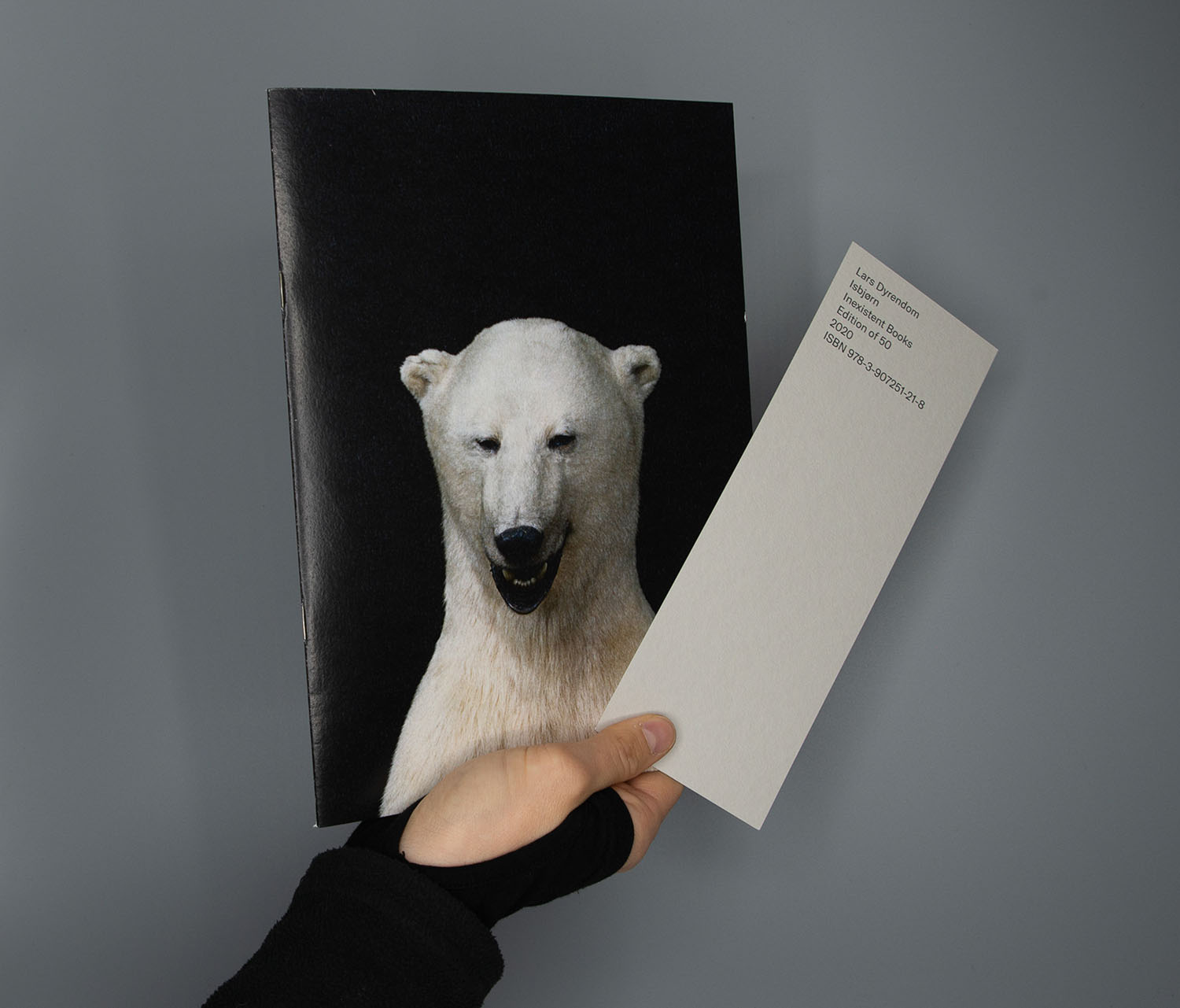
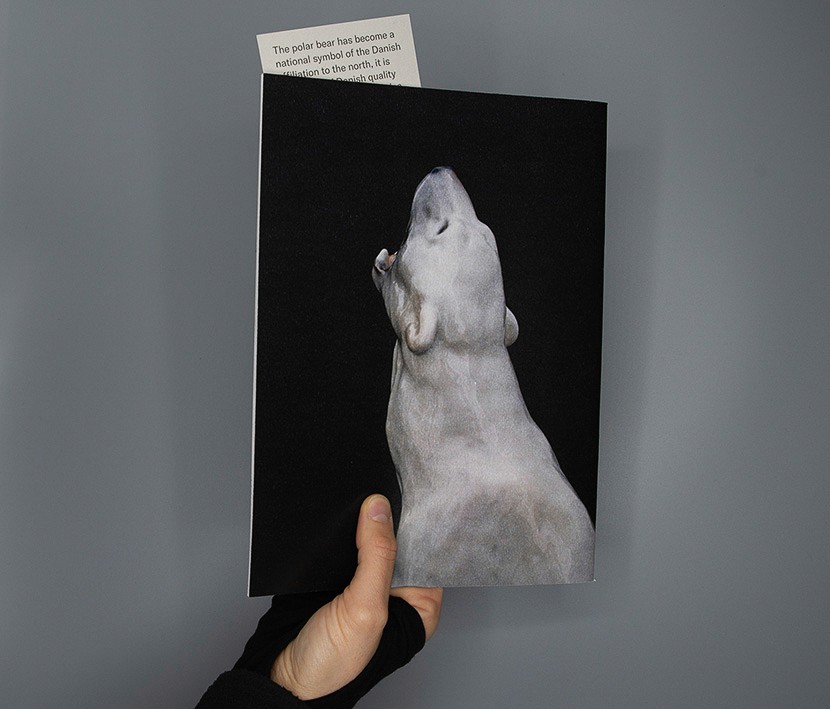
Isbjørn (1st edition)
Year: 2020
Publisher: Self-published
Print: Gothenburg
Edition: 50 copies
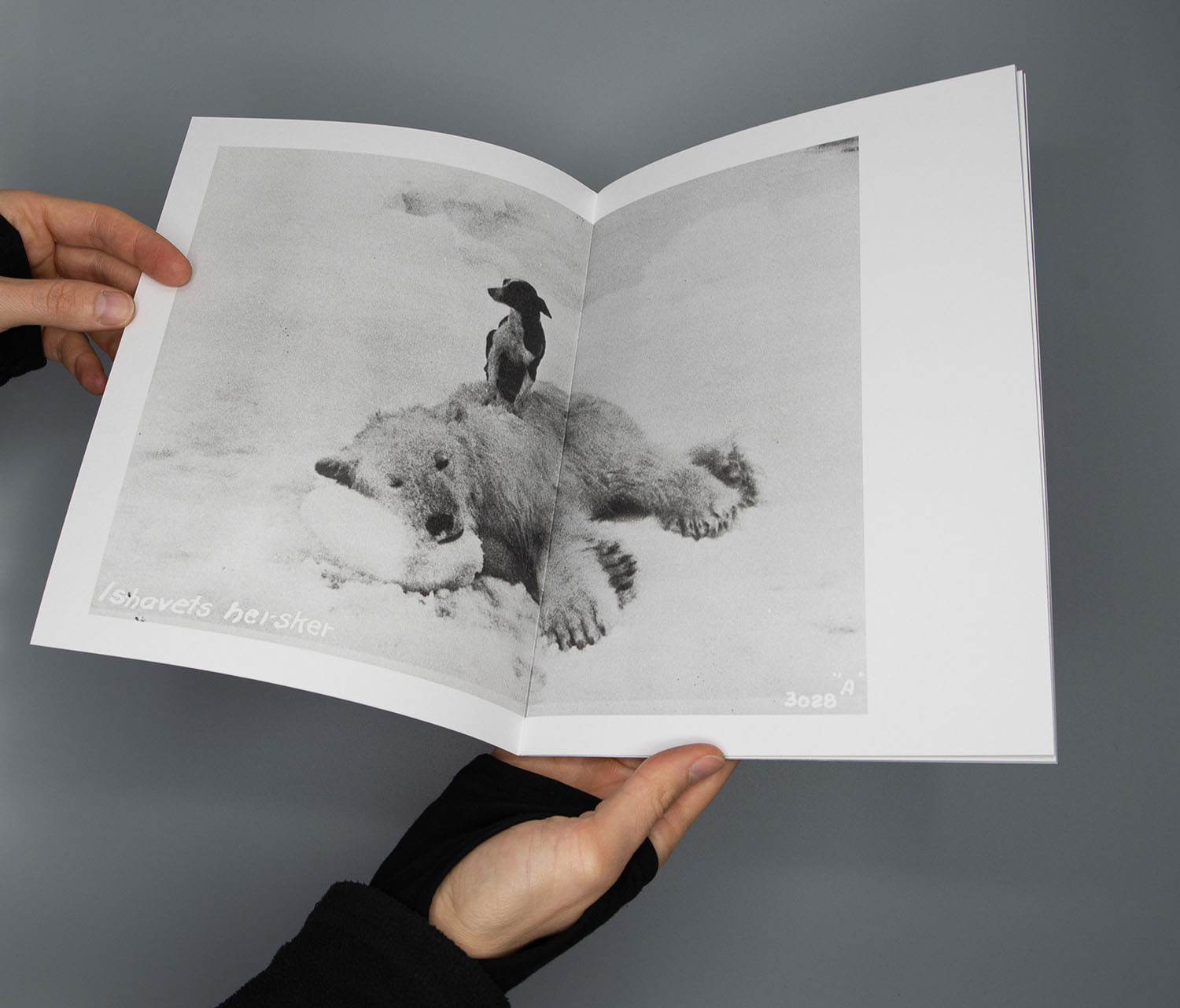
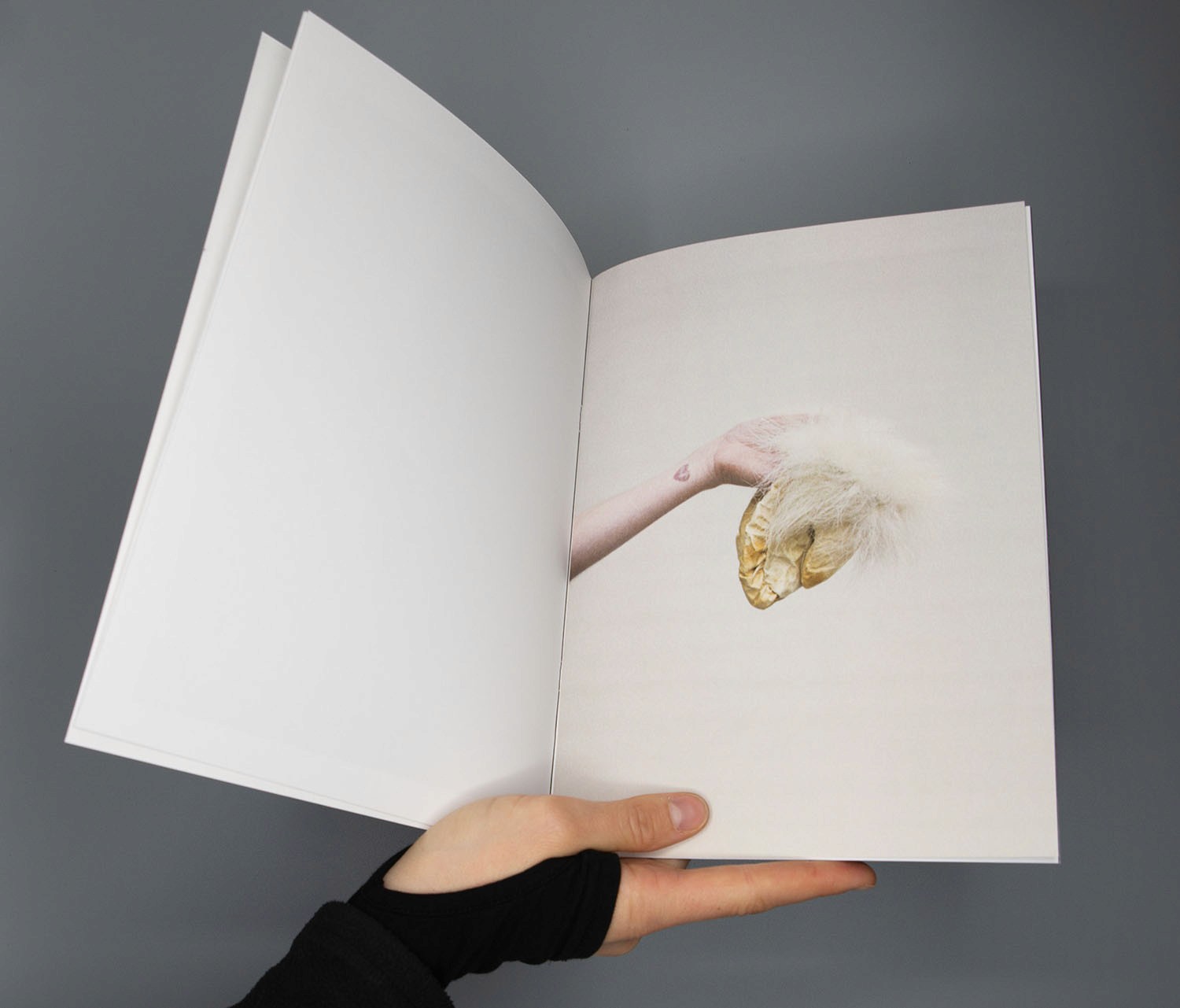
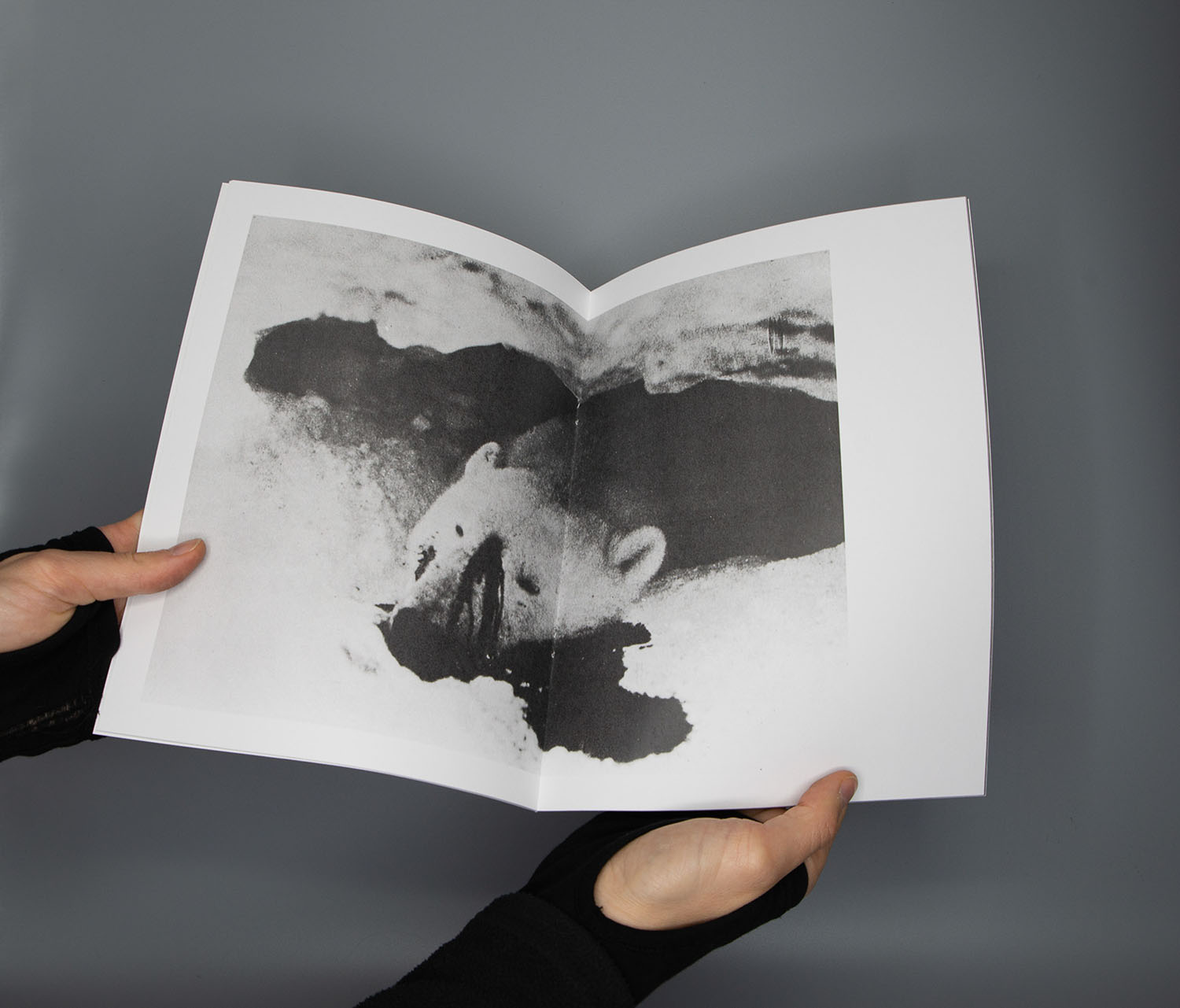
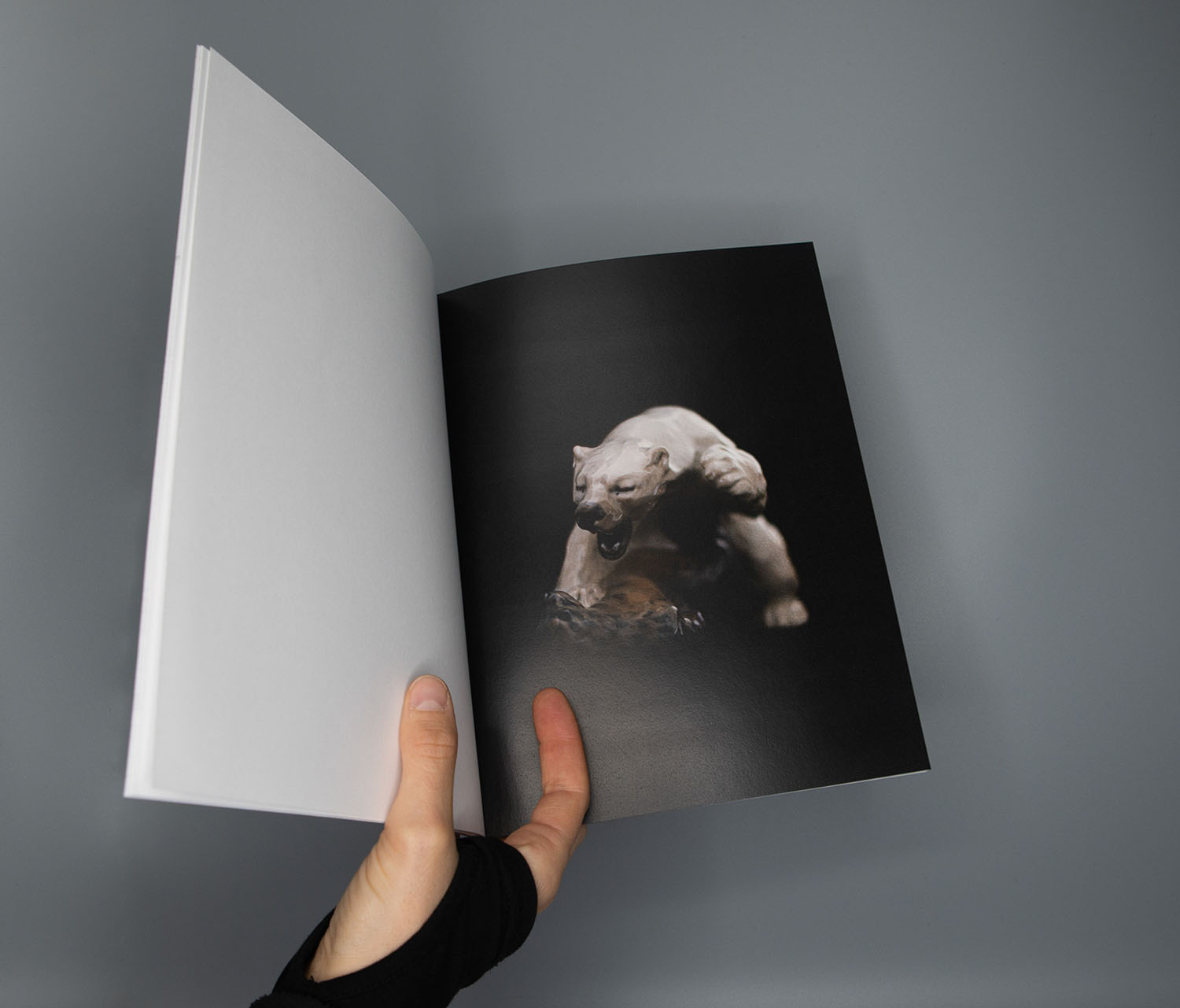
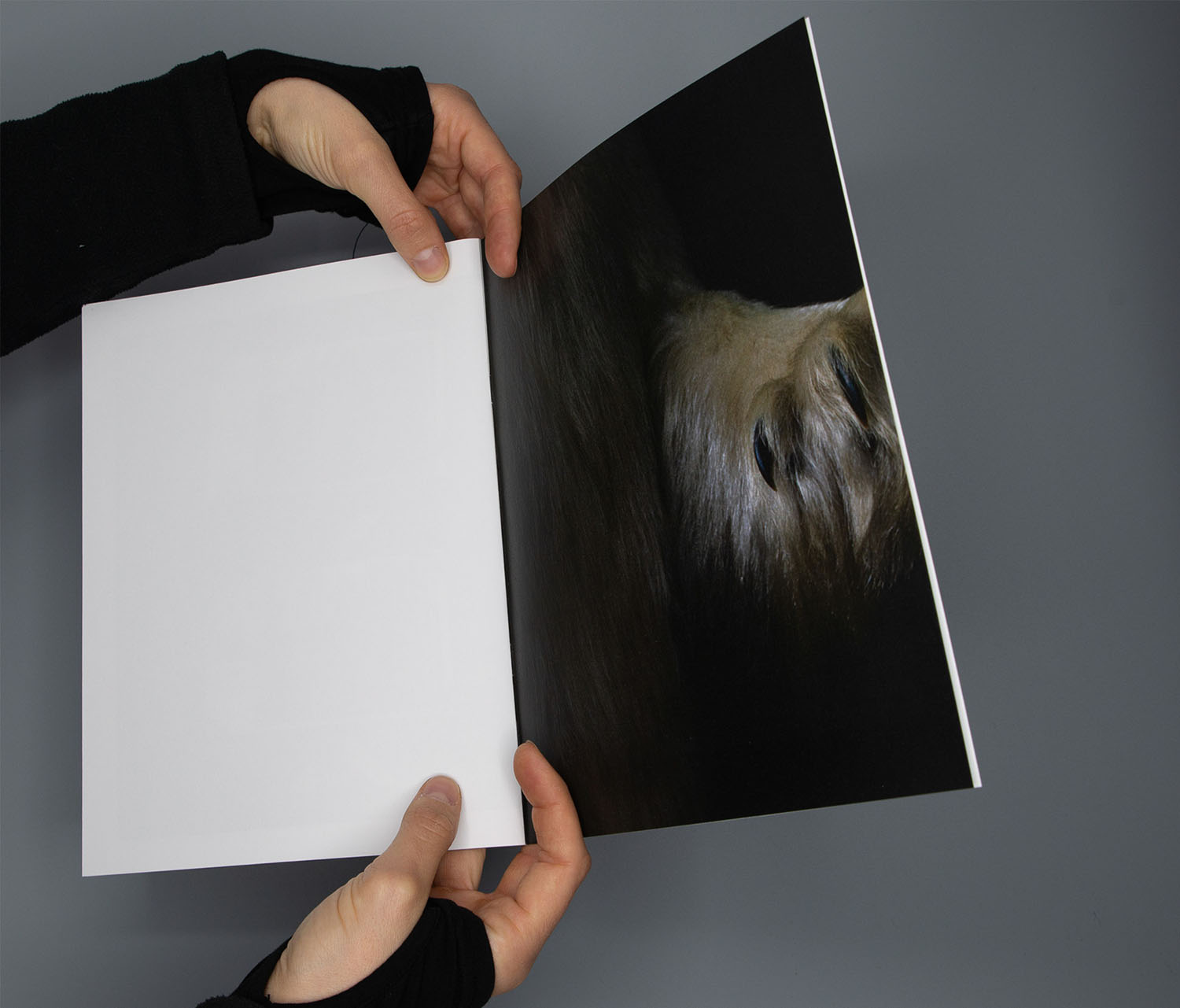
The polar bear has become a national symbol of Denmark’s connection to the North. It represents Danish quality and is associated with the idea of Danish design, such as the best-selling porcelain sculptures from Royal Copenhagen or the logo of Nordisk Film. However, when looking in the national archives, the polar bear appears dead—killed by the humans who conquered this wold of ice world. In recent years, I have focused on the relationship between Denmark and Greenland, a relationship shaped by a colonial history that remains visible today. This project involves working with archival and collected materials produced in Denmark on this subject. The polar bear has been presented both as a zine and as part of a larger exhibition project exploring Denmark’s colonial past.
Background
Greenland has been part of Denmark for over 300 years, first as a colony and then as a province since 1953. Greenland and the Faroe Islands joined the Danish kingdom through a constitutional reform. This was done with the blessing of the United Nations, which was working intensively on decolonization at that time. After 1953, the Danish state attempted to shape Greenlandic society according to its own vision. The impacts this had on Greenlandic society are not widely recognized in Danish context. I work with Danish archives and collections about Greenland that have been collected by Danes. As someone who has never been to Greenland, I approach the topic with my own prejudices, having grown up with ideas and stories about Greenland that I received from school, the media, and my family. As part of the process, I work with individual series that I combine in different ways.